

Last year, insurance got cheaper for corporate buyers, but many of them kept insuring themselves anyway. Marsh’s Captive Solutions 2026 Benchmarking Report counted 118 new captives in 2025, in fact, up 92 in 2024, even as commercial rates softened.
At the same time, Fortune 500 companies grew their captive premiums by 9%, and some of the fastest growth came in cyber, trade credit, and intellectual property. If there’s a takeaway from the past couple of years, it’s that self-insurance is now something companies choose even when the market is good.
That’s a shift from a few years ago, when rising premiums were the main reason why companies set up captives in the first place. Global Insurance Law Connect’s 2026 Captives Report identified the hard commercial market since 2018 as the biggest driver of captive growth, with steep premium increases and shrinking underwriting capacity pushing firms to set up their own insurers.
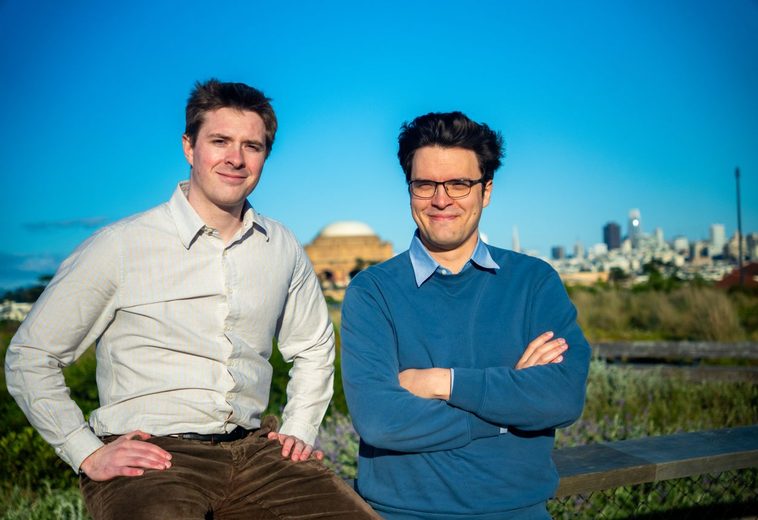
“Self-insurance is a great solution to long-standing problems of traditional corporate insurance: lack of coverage transparency and pricing fairness, and insurers shying away from actually taking risks,” Alex Musy, CEO and co-founder of AI-native actuarial advisory firm Huscarl, told Techli.
“All forms of self-insurance have grown tremendously in the past few years, and we can only expect this dynamic to accelerate with AI,” he added.
Musy co-founded Huscarl in 2025 with CTO Paulien Jeunesse, and the company uses AI to produce the actuarial studies regulators require before they license a captive. A credentialed actuary signs off on each one, however.
The startup raised a $5.6 million seed round led by FRST in September 2026, with participation from Y Combinator, MS&AD and Silicon Valley investors, and its clients include several risk retention groups and the captive of a company with more than $2 billion in revenue.
Where insurers pulled back
Prices here haven’t come down everywhere, though. Liability lines are still hard for buyers, even as most others have softened, and that’s where Huscarl says its demand comes from.
“Demand is stronger in industries where traditional insurance is hard to find [including] liability exposures for commercial auto or medical malpractice, but we’re also seeing a surge in demand from non-traditional property exposures [like] data centers,” Musy explained.
In commercial auto, for example, over a decade of rate increases still hasn’t kept up with claims. An AM Best October special report found that first-year commercial auto liability loss payments grew 6.4% per year between 2014 and 2024, more than double the 2.8% average rate of economic inflation over the same timeframe.
Medical malpractice shows this pressure the sharpest. The U.S. medical professional liability market lost $712 million in underwriting last year alone, up from $546 million in 2024, while placements are also getting harder. Risk Placement Services’ U.S. Healthcare Market Outlook from this year found that hospital programs that used to close in days now take weeks to put together, and that pricing on some placements had doubled year over year.
Risk retention groups are liability insurers owned by members of the same industry, and many physician groups get their cover through them.
Now, data centers illustrate a different kind of problem: size. Swiss Re Institute estimates that AI data centers and renewable energy infrastructure could generate around $200 billion in commercial insurance premiums between 2026 and 2030. Insurers can’t absorb that much risk on their own and, accordingly, experts project capacity limits to drive greater use of self-insurance via captives.
These assets are also new, meaning there is little claims history to price them on. Musy said Huscarl’s models are built for exactly that gap, using “modeling techniques that make data-thin emerging risks self-insurable.”
The company’s next step is what he calls a “zero-shot risk model generator for any type of risk,” which Huscarl “will continue to improve and expand over the coming months.”
A captive for every CFO
Actuaries have already started using AI in earnest. The Society of Actuaries’ (SOA) spring 2026 member survey, in polling 964 actuaries, found the profession moving from early experiments and towards more practical, structured use of the technology.
Musy thinks an equally important change is happening on the other side of the table, among the companies buying insurance. “It democratizes the idea of a captive. Frontier labs’ general-purpose models now put that idea within reach of any CFO or risk manager,” he noted.
In practice, it looks like a finance chief asking a chatbot whether a captive makes sense for their company and getting a reasonable first answer. Yet, turning that conversation into an insurer that can write policies and pay claims is much harder, and Musy sees that as the job for specialized AI like Huscarl’s.
Actuarial software itself is nothing new, he highlighted, but what it couldn’t handle was the disorder around the math.
“Traditional software was already able to handle deterministic actuarial calculations. What changes is flexibility: it applies to the messy data workflows the industry runs on, and to the choice of actuarial heuristics, assumptions and judgments,” he said.
When you look at what takes up an actuary’s time, judgement calls account for much of it. Actuaries decide which years of loss history to trust, adjust old claims to today’s costs, and borrow industry best practices when a company’s own records run thin.
So, before they can do all of that, they have to track down the data itself, which most companies spread across policies, loss reports and spreadsheets that contradict each other most of the time.
Asked what Huscarl’s AI does that a human actuary or traditional broker can’t—or can’t do at the same speed or cost—Musy was succinct. “It goes through every document a company holds, resolves contradictions between them and traces each figure back to its source. These minutiae are not comparable with the cognitive reality of a normal human brain, even an actuary’s, nor with their firm’s economic equation.”
In his view, the limit is both economic and human. Not a single firm paying for expert time can reasonably justify checking every figure by hand, so automating that step changes the price of the whole study.
Huscarl’s studies, Musy shared, arrive faster and at a fraction of the usual cost.
Who signs the numbers
The more work AI takes on, the more its mistakes can cost. The SOA’s September bulletin treats confabulation, when AI produces confident but false output, as an actuarial risk, recommending layering five controls against it.
Huscarl’s answer is to keep a person accountable for the results, regardless of how much of the work the software does.
“Humans take full responsibility for the entirety of our outputs, through the signature of a credentialed actuary. Whether produced by AI or humans, in the end, all outputs are held to actuarial standards and respect them: that is the criterion by which we draw the line,” he said.
The startup’s clients reach it at very different stages. Some come in at the start of a captive project, often through their brokers, and want help refining the structure, assumptions and business plan, while others already have a captive manager and plan, and just need the actuarial work for regulatory approval.
“Whatever the stage of the project, we go fast and are comfortable with ambiguity,” Musy said, adding that the goal is for the work to help clients run the captive profitably, not just getting it licensed.
Over the next 18 months, Huscarl plans to push its platform toward near-full automation of actuarial work, for captives and for other forms of self-insurance. Commercially, Musy said the company is focused on fast growth in the U.S. and on signing up more captive managers and brokers as partners.
However far that automation goes, the founder is clear on where it stops. “As our technology matures, we’re moving closer and closer towards 99% automation of the work itself—the responsibility doesn’t move.”
Featured image: Alex Musy via LinkedIn

Disclosure: This article mentions a client of an Espacio portfolio company.









 15 c
 9 c
 8 c
 10 c
 10 c