

As companies start using AI agents in their business processes, the infrastructure needed to handle, interpret and control vast amounts of data is drawing in new capital.
Ocient, a Chicago-based data analytics company, has raised $100 million in a Series C funding round, bringing its total capital raised to $260 million. The company announced on November 5 that the round was co-led by BOKA Capital and OCA Ventures, with the participation of existing investors and investor Dallas Venture Capital.
The investment will be used to expand OcientAIQ, the company’s streamlined data and analytics platform, which is meant to allow enterprises to adopt AI agents to large, ever-growing datasets.
Funding represents a growing trend in the development and deployment of AI systems, which are designed to handle information analysis, decision-making, and execution, with varying degrees of human oversight. However, these systems can’t be scaled to enterprises without more than advanced AI models. Organizations require data that they can rely on, infrastructure that can support their high workloads, and tools to ensure that automated systems comply with data security and governance standards.
Ocient is tackling this challenge with its technology. The OcientAIQ platform unifies data ingestion, analytics, governance and AI within one platform that lets companies analyze data without incurring the overhead of repeatedly moving data between siloed systems.
Its solutions are targeted to industries that rely on large amounts of data, such as the cybersecurity, telecommunications, financial services and national security sectors. Ocient’s platform allows for AI agents and analysts to query and interpret the entirety of data in real time, instead of relying on sampled information, according to a press release.
The investment will enable Ocient to “extend the reach of OcientAIQ to more customers as they scale their data and AI operations,” said John Morris, CEO of Ocient.
In the fast-paced, quality- and reliability-driven world of our customers, the speed, quality, and reliability of an answer matter a great deal,” Morris added in the company press statement.
The company also projects its revenue will exceed three times what it was in 2026 due to an increase in demand from customers in sectors where data needs are constantly increasing. Ocient didn’t reveal the total amount raised in Series C net of proceeds or break it down.
The investment also comes as investors are looking into the infrastructure of enterprise AI, especially given the number of organizations that are weighing autonomous systems in contexts where bad or poorly managed data can be a big operational problem.
Organizations are stepping up their investments in AI and other technologies, according to October Gartner predictions, which forecast that global IT spending will hit $7.35 trillion in 2027, a 15% rise from 2026. It provides greater context for the spending climate that companies building enterprise data infrastructure are facing for funding.
The growth isn’t limited to Ocient’s commercial analytics program. The company has been formalizing its operation in India as a dedicated subsidiary of the company, Ocient National Security Solutions, earlier this year, as it seeks to increase its international and government presence.
The investment celebrates BOKA Capital’s capacity to solve the complex challenges of data, especially in the defense and national security sector, said BOKA Capital CEO John James. OCA Ventures founding managing partner Jim Dugan also reiterated the firm’s backing, citing how far Ocient has come since its previous investment.
As enterprises increasingly embrace AI, the challenge for technology vendors to prove their infrastructure’s reliability, security, governance and predictable operating costs to deliver on results at scale will grow in significance.
Ocient’s recent investment round puts it in the company’s ranks that are trying to solve that problem. Whether the demand for agentic AI will lead to consistent profits will depend on enterprises’ ability to make these systems a regular part of their business.
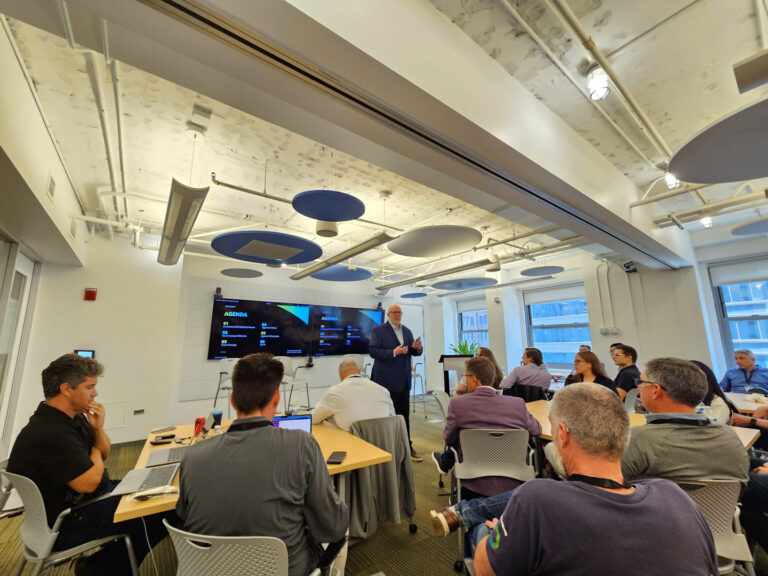
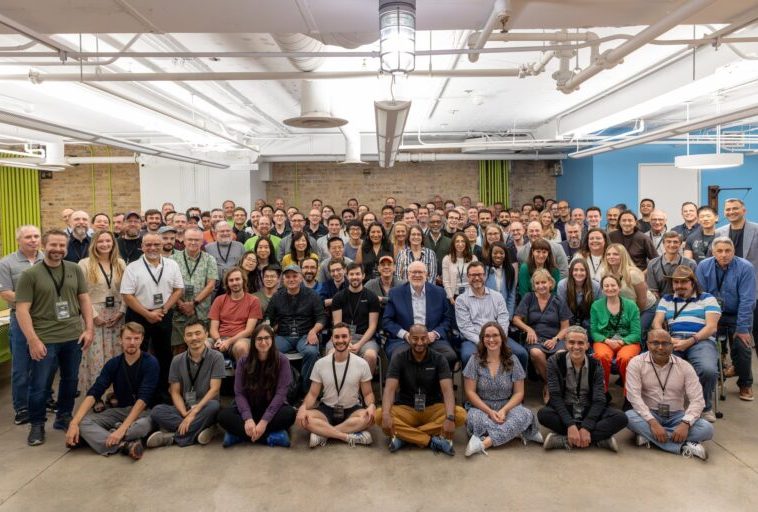
Featured image: Ocient team offsite in 2025.
Image credit: ocient.com







 15 c
 14 c