

Blockchain-based tokens could eventually represent investments in everything from housing and agricultural projects to power plants and manufacturing facilities, according to a new framework proposed by Crescite.
The company’s TOKEN Act seeks to establish a national approach to digital assets that prioritizes real-world applications over speculative trading, combining asset tokenization with regulatory standards, consumer safeguards, and economic development initiatives.
The proposal was developed by Catholic Token co-founders Eddie Cullen, CEO of Crescite, and Karl Kilb, chairman of the company. Its seven pillars address regulatory clarity, consumer protection, tokenization, public ethics, financial security, access to capital, and responsible innovation.
At its core, the initiative proposes creating a framework for bringing lawful real-world assets on-chain, potentially opening additional investment channels for businesses and infrastructure projects.
The proposal also addresses some of the risks associated with digital asset markets through custody requirements, asset segregation, disclosure obligations, and anti-fraud protections.
“For too long, the conversation about digital assets has been about price charts and speculation. The TOKEN Act™ changes the question to what this technology can build. This is technology for good, and it should lift every family, not just a few.”
Beyond its consumer protection measures, the framework introduces a state-level approach to tokenization. It envisions a national standard that individual states could adapt to their economic priorities through their own digital token initiatives.
The proposed New York Token™, for instance, would concentrate on finance, housing, infrastructure, and technology.
Government participation is another part of the proposal. Cullen and Kilb advocate for federal and state authorities to issue tokens under appropriate oversight, with the objective of reducing public debt and working toward budget surpluses.
The framework also seeks to expand financing opportunities for small businesses and communities that have historically been overlooked by traditional financial institutions.
Its security provisions address anti-money laundering, sanctions compliance, and fraud prevention, while its ethics pillar proposes party-neutral conflict-of-interest standards for public officials.
The initiative draws on the founders’ backgrounds in technology, law, and entrepreneurship. Kilb spent 22 years at Bloomberg LP, including more than 15 years as its first general counsel, and currently works as a partner at Dunnington, Bartholow & Miller LLP. He also teaches at Fordham University School of Law.
Cullen previously served as a staffer for President Biden and directed Fordham University’s incubator program. He is also CEO of Crescite, the exclusive protocol development firm for Catholic Token, which describes itself as the world’s first faith-based token.
The TOKEN Act™ is a proposed framework, not enacted legislation. Its broader ambition is to establish the conditions under which tokenization could become part of the country’s financial and economic infrastructure.
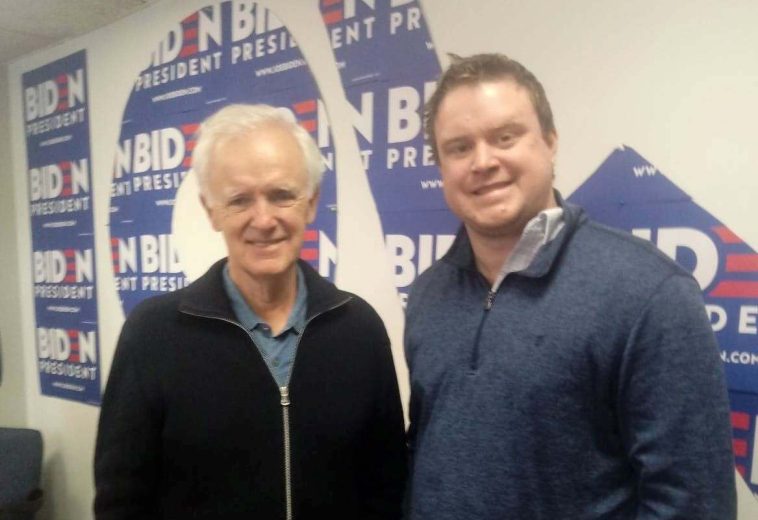
Featured image: Eddie Francis Cullen with Bob Kerrey.










 18 c
 15 c
 6 c