

Healthcare AI is advancing from medical records summarization and answering basic questions to carrying out multistep clinical and administrative work, such as deciding which tests to order, moving through electronic health records, and acting on what it finds.
When patient care is on the line, a question is beginning to arise in the minds of those developers creating systems for complex clinical and administrative tasks: can these systems make sound decisions?
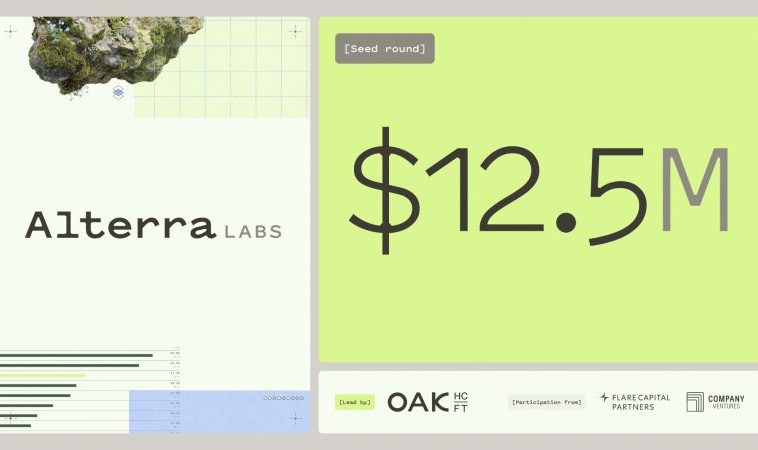
Alterra Labs, a New York-based analytics firm, is confident that the answer is crucial for healthcare AI development. On November 10, the company announced a $12.5 million round of funding, led by Oak HC/FT and featuring participation from Fortune’s own partner, Flare Capital Partners, among other investors including Company Ventures.
The startup creates simulated healthcare environments to test and train AI models, and its assessments look beyond whether a model gives the correct answer. Akterra evaluates how a model reaches its conclusion and whether the actions it takes comply with clinical standards.
For example, Fortune reported that a model might have to make decisions about which tests to run in a case involving a simulated patient. The decisions made by the clinician are made based on whether they are medically suitable, and identifying failures can be followed up with training sessions.
Here, a system can learn to navigate electronic health records, or perform administrative tasks without showing the clinical reasoning behind what actions the system takes.
Putting clinical judgment under scrutiny
Model decisions are evaluated by clinicians and researchers, and the tasks are designed with their input, considering weaknesses in simulated health care workflows. The company’s goal is providing richer feedback to the developers than generic benchmarks do.
What motivates this month’s investment is the concern in healthcare generally: model capabilities are improving but can be hard to demonstrate in particular environments. According to Oak HC/FT’s investment announcement, Alterra is developing virtual environments and evaluations for complex clinical and scientific tasks.
This is reflected in the regulatory framework. The FDA regulates medical devices that incorporate AI in a risk-based framework based on the intended use and technology features, covering aspects of development, validation, deployment, monitoring, maintenance, and modification. As of September this year, over 1,600 AI-powered medical devices had been approved for sale in the U.S.
Not all healthcare AI tools are subject to medical device regulation, however, and simulated testing is not enough to be put into clinical use. The FDA’s approach focuses on evaluating systems according to their intended use and risks that may result from their use.
A test environment is not the same as a patient
The issue many healthcare service providers face is whether the results of the evaluations can be used for deciding when the AI system is ready for use, where there is a need for human oversight, and how performance will be monitored post-deployment.
After all, simulations can reveal flaws under supervised conditions, and cannot simulate patients, clinical settings or unexpected complications. Evidence and clinical validation in the real world are still critical.
Because of this, it is important for companies creating these systems to both demonstrate a model’s effectiveness on tasks and to reveal where it fails—in addition to how failures are being measured and how they will be prevented from impacting patient care.
Investment in Alterra is a testament of interest in the infrastructure that is meant to address that challenge with the seed round worth $12.5 million. Instead of being seen as a last step after a medical AI model has been created, the company is making an effort to make clinical evaluation a priority.
The tougher challenge for healthcare AI won’t be about the answers a system gives to a medical query. Whether or not its decisions can hold up to the scrutiny of the professionals responsible for patients will be the test.
AI is not ready to take the place of doctors and nurses in medicine, unless its decision-making is worthy of one.
Featured image: Akash Kapoor via LinkedIn









 20 c
 16 c
 8 c