

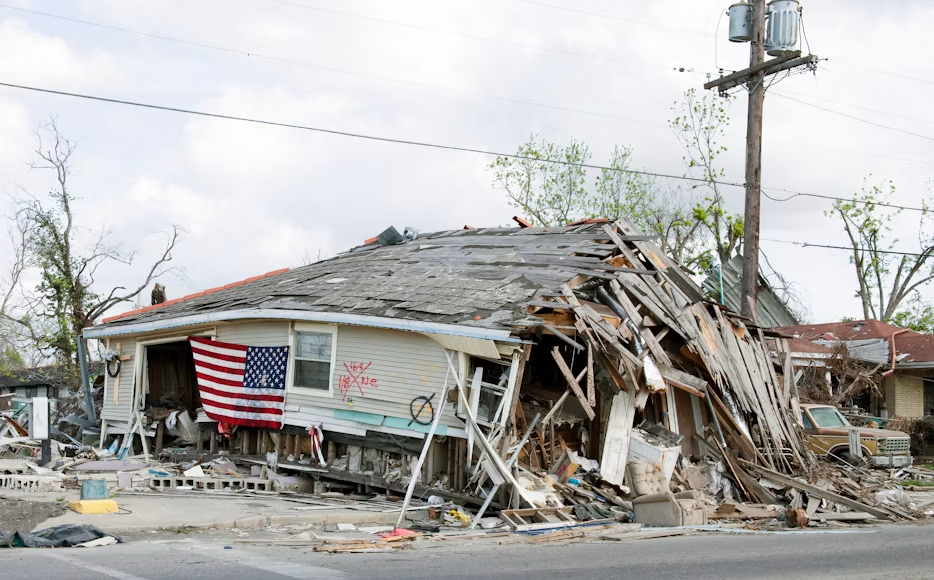
Every big storm ends with a scorecard. Climate central found that major weather-related outages averaged 78% more per year in 2011 through 2021 than in the decade before in the U.S.; hurricane and tornado season arrives right on schedule, and every long restoration ends the same way, with locals, TV crews, and customers asking the same questions: were you ready before the storm hit, and what took so long after?
Most storm damage is decided months earlier, long before radar screens light up, by which trees got trimmed and which poles got checked. But a growing group of AI companies is working on better answers to these questions, each built for a moment in the storm, whether that is watching trees months in advance or reading public feeds while the wind is still blowing.
These are the AI companies that help utilities get ready before the rain and wind hit.
Overstory

Overstory turns satellite and aerial imagery into a tree-by-tree map of what could fall on a line, then layers in asset locations and wildfire maps. It released two models in April, Ignition and Outage, that can incorporate a utility’s outage history, along with asset age and weather data, to rank trees, shrubs, and poles by their likelihood of causing the next power outage. This produces an essential list that power line workers and crews can use to avoid future outages.
Sharper Shape

Sharper Shape flies drones and helicopters carrying LiDAR, HD, and infrared sensors over transmission and distribution corridors, and its CORE software turns the data into what it calls a Living Digital Twin of the line. One flight is enough for the AI to detect individual trees, identify species, flag encroachments, and produce a prioritized trim plan for ground crews. The company operates engineering centers in Finland and Salt Lake City and says its software supports inspection workflows for more than $100 billion in infrastructure.
AliDash
AiDash starts from orbit. Very high-resolution satellite imagery, refreshed up to a dozen times a year, catches vegetation creeping toward lines across an entire network, and higher-frequency passes track fuel load and moisture for wildfire risk assessment. Its CRIS Storm product forecasts outages up to 120 hours ahead so utilities can position crews before the wind arrives, and it shares a platform with the company’s vegetation and asset tools. AiDash says more than 200 customers use it.
SEW

SEW’s Outage and Storm AI Platform is built around the moment a customer reaches for their phone, with the goal of getting there first. It pairs predictive storm tracking and live outage maps (with weather overlays) with customer notifications across SMS, email, IVR, WhatsApp, chatbot, and push, adds AI-driven crew dispatch, and plugs into the OMS, CIS, and GIS systems that a utility already runs. SEW says it pushes more than a million outage notifications a day during black-sky events. Its case studies include Alliant Energy and OPPD, and one customer credits the platform with warning them before calls started hitting the contact center. Slow, vague communication is usually the first complaint from a mayor’s office after a long outage, so a system whose whole job is to get the word out early has a receptive audience right now.
Dataminr
Dataminr is the company newsrooms and emergency managers pay to hear about things first. Its AI reads more than a million public data sources in real time, including social posts, sensor data, news and video, and flags high-impact events while they are still forming. For a utility storm room, that means learning about the substation fire or the washed-out access road from the public feed before the first customer call lands, and pushing that context to whoever needs it. The Oklahoma Department of Emergency Management uses it to shave time off its response.
E Source

E Source’s GridInform Storm Intelligence is the forecasting brain of the storm room. Its models blend a utility’s own data with multiple weather feeds and local conditions like vegetation and infrastructure to forecast outage risk up to five days out, and the company says that combination improves prediction accuracy by as much as 30 percent. As the storm hits, the same model recalculates crew requirements and estimated times of assessment and restoration, while its Storm Outage Insight view tracks restoration progress in real time and archives it for the post-mortem. One Northeastern utility cut its storm response costs 25 percent using it.
After the storm, the wind stops, and the clock on restoration and cost recovery starts running. Every hour spent assessing is an hour crews are not repairing, and every undocumented hour is trustworthiness and money a utility may never recover. These are the AI tools that speed up damage assessment, documentation, and recovery once the storm has passed.
Noteworthy AI
Noteworthy AI bolts autonomous cameras onto the trucks a utility already owns. Crews drive their normal routes, the cameras photograph every pole they pass, and machine-learning models trained on more than 15 pole-top components identify what broke and pinpoint its location within two meters. Results land in the command center within minutes, which the company says makes damage assessment up to 50 times faster. There is a paperwork bonus too. Because the system stores pre- and post-disaster imagery for every asset, the FEMA documentation is already sitting in the cloud.
Buzz Solutions

Buzz Solutions’ PowerAI is a visual AI platform that turns utilities’ inspection imagery into prioritized, actionable insights to improve grid reliability and condition-based maintenance. A single drone season produces tens of thousands of photos of towers, poles, substations, and solar arrays, and a human takes one to two minutes per image. PowerAI takes 0.6 seconds and processes more than 25,000 images per hour. AEP Texas ran 88,000 images through it in one season and saved six months of work. The City of Troy, Alabama, a municipal utility with 7,800 customers in tornado- and hurricane-prone country, used it to eliminate 1,118 hours of manual review per year. The payoff shows up before the weather does, eliminating 90% of failing components before a storm even arrives.
Floodbase
Floodbase is the odd one out on this list because it mostly sells to insurers, and it belongs here anyway because of money. Its deep learning model fuses satellite imagery and ground sensors with hydrology to measure flooded areas in near real time, drawing on 17 observational sources so cloud cover cannot blind it. After a storm, that record does two jobs. Emergency managers see where the water actually is, and parametric policies based on Floodbase data pay out within days, with no adjuster visit, covering costs like infrastructure, utilities, cleanup, and lost tax revenue. Municipalities that cannot afford to wait on federal aid get their own program. The New York Times ran its Guadalupe River flood mapping on the front page last summer.
KYRO AI

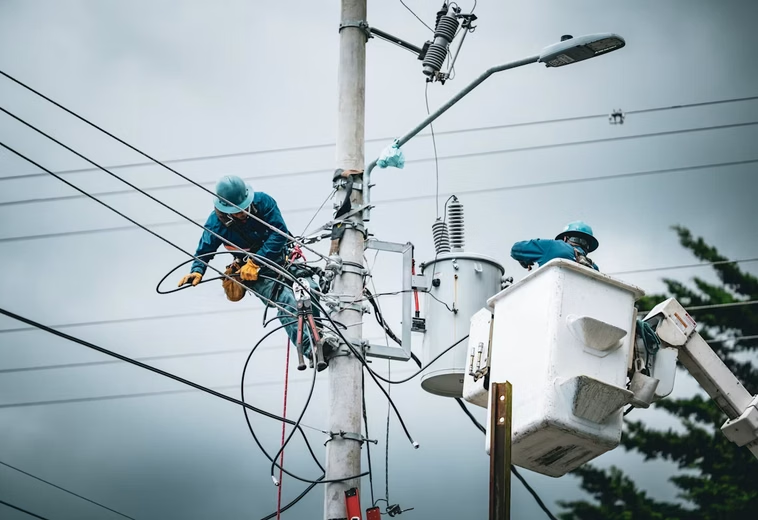
Every company above sells to the utility. KYRO AI’s StormShield focuses on the contractors and prime contractors who show up with bucket trucks, so it supports work before, during, and after a storm. Rosters and crew certifications stay validated year-round to make building deployment-ready crews fast, color-coded ArcGIS maps and an offline-first app guide and document field work during the storm, and the same records become timesheets and invoices for cost recovery afterward. KYRO AI also offers Storm Call Center, a free app that shows linemen where storm calls are likely to develop nationwide and alerts them when one goes live.
Connecting the ten tools that win the storm
Most utilities already use several of these tools across preparation, response, and recovery, which creates a new opportunity: making them work together.
Today, the vegetation model often doesn’t talk to the outage forecaster, and damage-assessment cameras don’t automatically feed into contractor timesheets, so the storm room ends up juggling a dozen browser tabs.
The industry’s answer, slowly, is platforms. AiDash is folding storm, vegetation, wildfire, and asset intelligence into one system; E Source sells outage prediction and restoration tracking as a single product; SEW ships pre-integrated with the OMS and CIS.; and on the contractor side, KYRO AI is making the case that crew data, credentials, timesheets, and the final invoice should all live in one place, from the first storm call to the final payment.
After a long outage, questions always center on fallen trees, crew counts, and restoration times.
The companies on this list are betting that the utilities with good answers, before, during, and after the storm, will be the ones whose tools already talk to each other.
Featured image: Mario Spencer via Unsplash+
Disclosure: This article mentions a client of an Espacio portfolio company.








 28 c
28 c 19 c
19 c 16 c
16 c