

The debate over artificial intelligence and robotics has largely focused on one question: What jobs will machines eliminate?
That, ultimately, may be the wrong question to ask. As robots become increasingly capable of performing physical tasks, business leaders should also be asking who will own those machines, who will operate them, and who will capture the economic value they create. The answers could determine whether automation primarily concentrates wealth—or creates a new generation of small-business owners.
That is the premise behind SkyPSI, a Dallas-based technology company launching with $5 million in founder capital. Rather than positioning robotics as a replacement for workers, SkyPSI is building a model in which workers use robots to become entrepreneurs.
The company’s initial market is commercial exterior cleaning, an industry where automation can address both labor shortages and workplace safety. SkyPSI provides professional cleaning drones, training and certification to independent operators while also supplying the commercial contracts needed to keep those businesses working.
The distinction is important. A robot sitting in a warehouse creates little economic value. A robot that enables an individual to win contracts, serve customers and build a company can create an entirely different outcome.
Harvard Business Review has recently highlighted how advances in generative AI are making robots more adaptive, while also emphasizing that successful AI adoption depends on redesigning work rather than simply introducing new technology. SkyPSI illustrates what that principle could look like in a traditionally blue-collar industry.
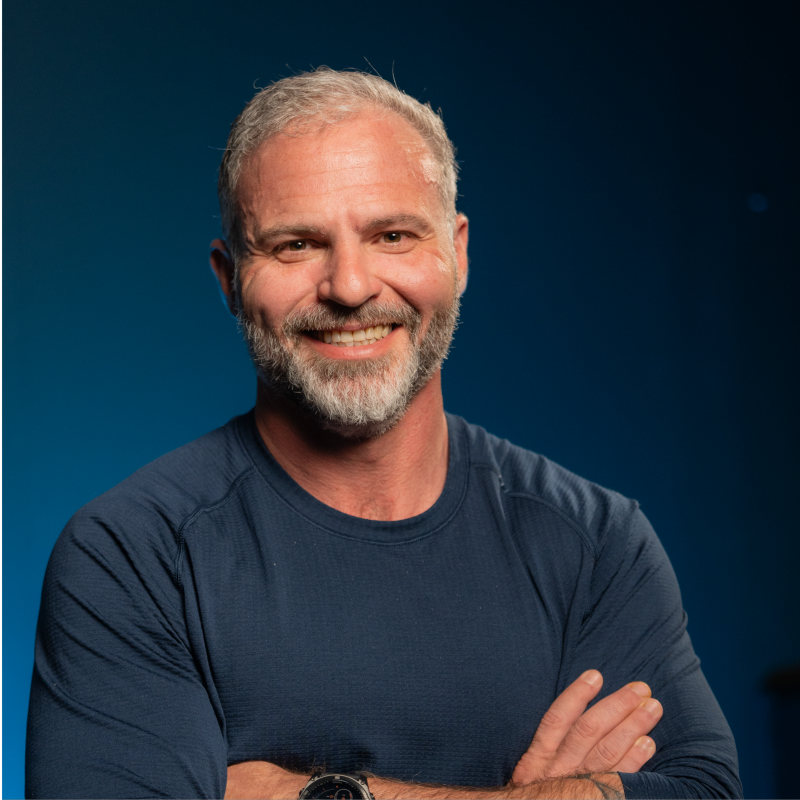
Its founder, Vic Pellicano, sees the opportunity through the lens of his own experience. After growing up in a trailer park outside Chicago, losing both parents and experiencing homelessness, Pellicano built a career in technology. He founded Verenia, which was acquired by Oracle in 2022, followed by AI drone company Avianna, which was sold in 2024.
Now he is investing $5 million of his own money in a company designed to give other workers access to some of the leverage technology provided him.
The model could prove significant because the barriers to entrepreneurship are often less about someone’s willingness to work than their ability to access capital, customers and specialized equipment. Someone may know how to run a cleaning crew but lack the capital to purchase sophisticated robotics, understand the technology or secure contracts with large commercial property owners.
SkyPSI is attempting to bundle those capabilities. This suggests a broader lesson for companies developing robotics: selling machines may not be enough. The larger opportunity could lie in creating the business infrastructure around them. The same model could eventually extend beyond cleaning. Robots could enable independent operators in landscaping, industrial maintenance, agriculture, inspection, construction and other physical services. In each case, the technology could reduce the physical risks associated with the work while increasing the productivity of a small team.
The implications for workforce strategy are substantial. Instead of training workers to compete with increasingly capable machines, companies and policymakers could focus on training people to operate, manage and own them.
That would represent a different philosophy of automation. The objective would not simply be to make labor cheaper. It would be to make individual workers more economically powerful.
SkyPSI is beginning that experiment in Dallas-Fort Worth, with plans to expand. To learn more visit www.skypsi.com







 21 c
21 c 26 c
26 c 20 c
20 c